Lead Magnets That Convert (And the Ones That Don't)
6 min read
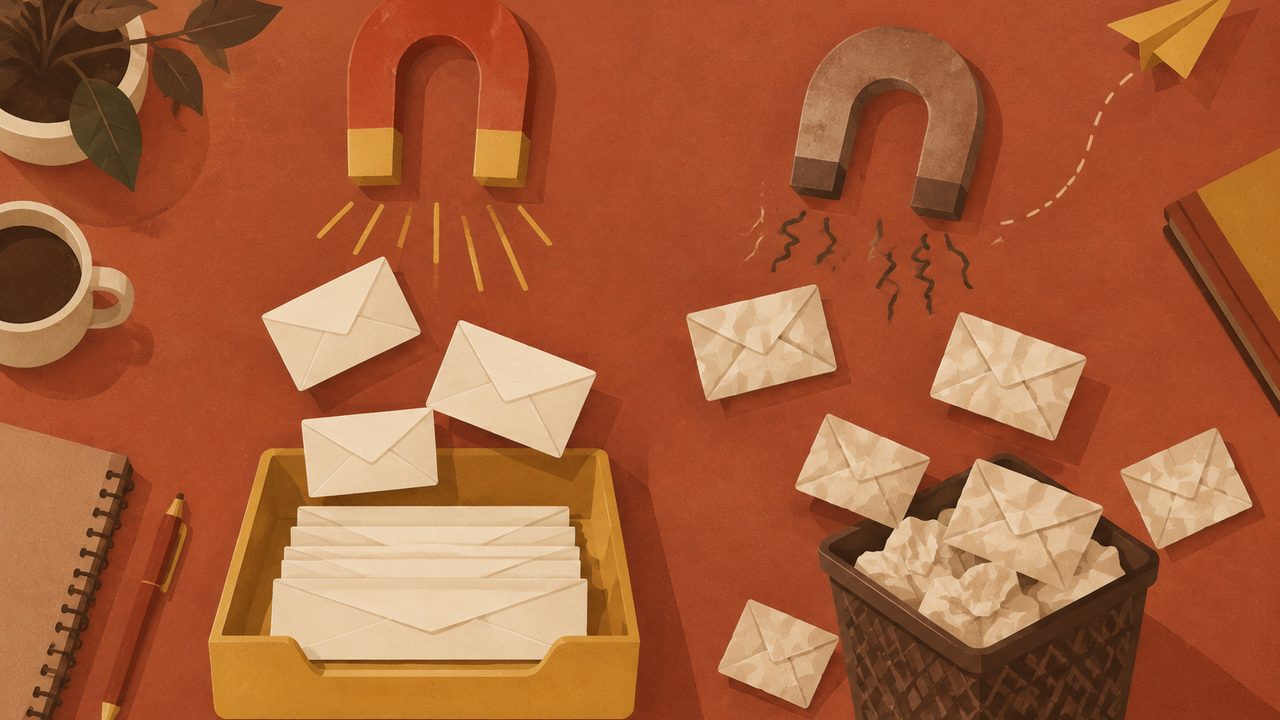
A lead magnet is a useful exchange: someone gives you their email address, and you give them something worth receiving. The trouble starts when businesses optimise only for the exchange. A prize draw can collect hundreds of addresses while attracting almost nobody who wants the product. A modest checklist can bring in fewer people and generate better enquiries.
The difference is rarely production value. It is the connection between the subscriber’s immediate problem, the resource you provide, and the work you sell. Build that connection first. Then choose the format, write the landing page, and decide what happens after the welcome email.
What makes a lead magnet convert?
There are two conversions to care about: visitor to subscriber, and subscriber to a meaningful next action. That second action might be booking a consultation, starting a trial, buying a product, or simply clicking through to a relevant service page. A strong lead magnet supports both.
Start with a promise that identifies a person, a task, and a usable result. “Free marketing guide” tells visitors almost nothing. “A 20-minute launch email checklist for your first online workshop” tells a creator whether it is relevant and how they might use it.
The best lead magnet is not the biggest free thing you can make. It is the smallest useful step towards the problem you get paid to solve.
Before building anything, answer three questions:
- Would someone who needs my paid offer also need this resource?
- Can they get a useful result without hours of reading?
- Does the resource lead naturally to a relevant next step?
If the last answer requires an awkward sales pitch, reconsider the topic. A wedding photographer’s venue-lighting checklist has a clearer connection to bookings than a generic guide to taking better phone photos.
Formats that earn their place
No format wins automatically. A template works when the reader needs a starting point; a guide works when they need an explanation. Match the resource to the job rather than copying whatever another business is giving away.
| Format | Best use | Common weakness |
|---|---|---|
| Checklist | Completing a repeatable task without omissions | Advice is too obvious to be useful |
| Template | Producing a first draft or working document | Requires extensive customisation |
| Calculator | Estimating cost, capacity, or return | Assumptions are hidden or unrealistic |
| Short email course | Learning a process in manageable steps | Lessons arrive without clear actions |
| Buyer’s guide | Comparing options before a purchase | Reads like a disguised sales brochure |
| Discount | Encouraging a near-term product purchase | Attracts bargain hunters and reduces margin |
Templates: remove the blank page
A freelance bookkeeper could offer a monthly cash-flow spreadsheet with example entries and a short setup note. That is more immediately usable than an ebook explaining why cash flow matters. Include a completed example, a blank version, and instructions for the first task. Test the file permissions before promoting it.
Calculators: make a decision easier
A catering company could offer an event-budget worksheet using guest count, service style, and staffing requirements. Label figures as estimates, state what is excluded, and explain when a tailored quote becomes necessary. The worksheet should help someone plan, not produce an artificially low number to force an enquiry.
Email courses: give people a reason to return
A five-day course suits a task that benefits from practice between lessons. For example, a copywriter might teach service businesses to improve one website section each day. Each message needs one practical exercise. Explain the delivery schedule at sign-up and distinguish the course from any ongoing newsletter.
The freebies that usually disappoint
Weak lead magnets often fail because they attract the wrong intent or ask too much of the reader. Watch for these patterns:
- The oversized ebook: sixty pages assembled from old blog posts, with no obvious place to start. Replace it with a short decision guide or a clearly signposted reference resource.
- The unrelated giveaway: a popular gadget offered by a specialist consultancy. Interest in the prize tells you little about interest in the service.
- The vague swipe file: dozens of examples without notes on when, why, or how to use them.
- The incomplete tool: a resource that promises a result but withholds essential steps until the reader pays.
Long resources and giveaways are not inherently bad. A detailed technical guide can be valuable when the buying decision is complex. The test is whether the length or incentive serves the intended audience, rather than merely making the offer look impressive.
Build a page that makes the exchange clear
Your opt-in page has one main job: help the right person recognise the value and understand what they are agreeing to. Keep navigation and competing calls to action out of the way where practical.
- Write an outcome-led headline. “Plan your next four newsletter issues in 30 minutes” is clearer than “Get our exclusive content planner”, provided the resource supports that promise.
- Show what is inside. Name the worksheets, prompts, or calculations rather than promising “valuable insights”.
- Add a preview. One readable sample page can establish usefulness better than a decorative ebook cover.
- Keep the form proportionate. Start with email only unless another field has a specific operational purpose.
- Set expectations. State how the resource arrives and what further emails, if any, someone is choosing to receive.
Do not treat a download request as blanket permission for marketing. Use clear consent wording and any separate choices required by the rules that apply to your audience. Include access to your privacy information and an easy unsubscribe in marketing emails.
Make delivery the start of a useful sequence
Send the resource promptly. Put the access button near the top of the delivery email, with a plain-text alternative where useful. Avoid burying it beneath your business story or a sales pitch.
For subscribers who have agreed to follow-up marketing, a simple sequence might look like this:
- Immediately: deliver the resource and suggest the first action.
- Two days later: explain one common mistake and how to avoid it.
- Five days later: show a worked example and offer a relevant next step.
Make the invitation proportionate. A cash-flow template can lead to a bookkeeping consultation. A newsletter planner can lead to an editorial planning service. Neither needs a manufactured deadline.
Measure usefulness beyond the opt-in
Track landing-page visitors, confirmed subscribers, resource-access clicks, unsubscribes, and the downstream action that matters to your business. Compare cohorts over the same period. Email opens are a weaker diagnostic because privacy features can distort them.
Consider an illustrative test. Resource A receives 500 visitors, produces 100 subscribers, and generates two qualified enquiries within 30 days. Resource B receives 500 visitors, produces 60 subscribers, and generates six qualified enquiries. A wins on opt-in rate, 20% against 12%. B wins on qualified enquiries per visitor, 1.2% against 0.4%.
Those small enquiry counts are directional, not conclusive. Repeat the test before declaring a winner, and compare acquisition costs and eventual sales. Keep traffic sources comparable: warm newsletter referrals and cold advertising visitors rarely arrive with the same intent.
If visits are healthy but sign-ups are weak, test the promise first. If sign-ups are healthy but later actions are weak, inspect audience fit, delivery, and the follow-up offer before redesigning the form.
Conclusion: start small, then improve
Build one resource for one recognisable customer problem. Make it easy to use, explain the email relationship clearly, and measure what happens after the download. A useful two-page checklist that brings in suitable customers is doing a better job than an elaborate freebie that only increases your subscriber count.
Marketing Notes is reader-supported and may earn a commission from links to tools we mention. This article is general information, not financial, legal or professional advice.